Last Updated on September 27, 2026
Adderall contains amphetamine, which standard hair drug tests are built to detect, and a positive result is common if you have used it within the testing window. Hair testing typically covers about 90 days of growth, though a dose takes roughly 5 to 7 days to show up in scalp hair. A valid prescription is normally resolved through documentation to a Medical Review Officer, not through guesswork.
TL;DR:
- Hair testing for amphetamines detects use within roughly the past 90 days, with drug incorporation starting about 5 to 7 days after intake.
- The standard 1.5 inch hair segment reflects approximately 90 days of growth, but individual factors like hair color and chemical treatments can affect detection.
- Confirmatory testing using GC/MS or LC-MS/MS is necessary to verify initial immunoassay positives, with documentation required for prescriptions.
- Detection likelihood increases with regular use and darker hair, while bleaching and coloring can lower measured drug concentrations.
- Using specialized preparation methods like Macujo can help reduce drug levels but cannot guarantee passing a test, especially for infrequent or low-dose use.
Table of Contents
- How far back does hair testing for amphetamines go?
- What labs actually do to test hair for amphetamines
- What changes your odds of a positive Adderall hair test
- What to do about a positive or non-negative result
- Where the science is solid and where it gets uncertain
- What Macujo brings to preparing for a hair test
- Why realistic expectations matter more than shortcuts
- Real preparation options if you have a test coming up
- Sources
- FAQ
How far back does hair testing for amphetamines go?
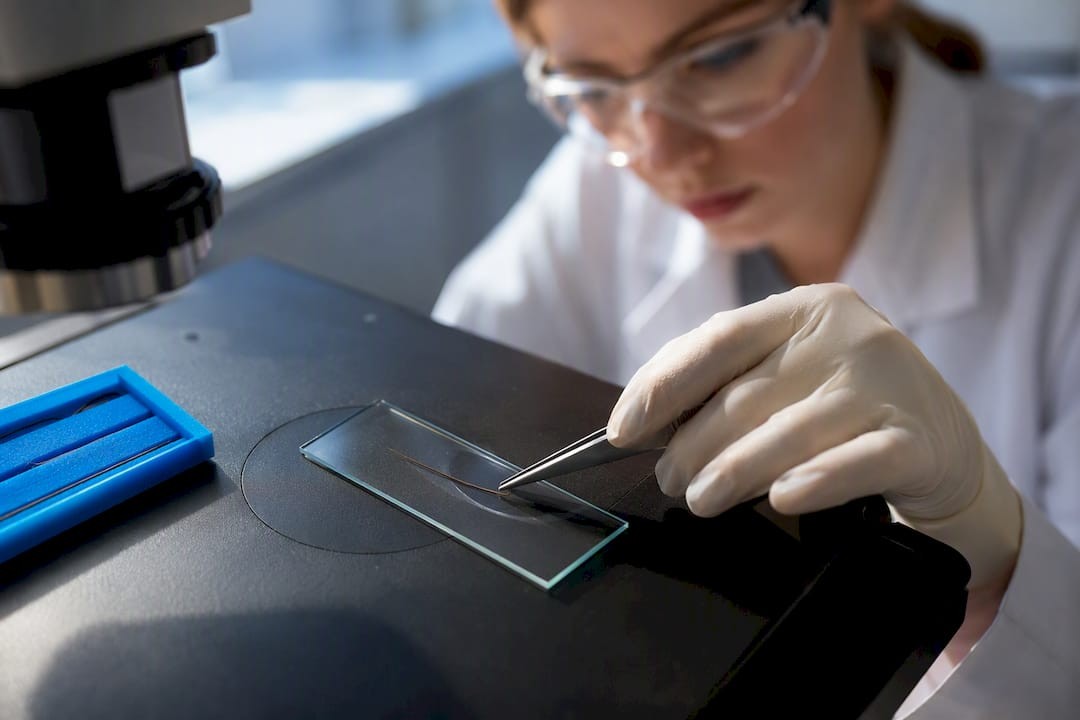
Labs collect a hair sample from the posterior vertex, cut close to the scalp, and use the segment closest to the root because it reflects the most recent growth. A 1.5 inch segment (about 4 centimeters) is the industry standard because average scalp hair grows at a rate that corresponds to roughly 90 days per that length. That is where the commonly cited 90 day detection window for amphetamines comes from, and it is an average, not a fixed rule for every head of hair.
There is also a biological delay before anything shows up at all. Amphetamine travels through the bloodstream and gets incorporated into the hair shaft as it forms below the scalp, which is why a dose taken yesterday will not appear in a test today.
- A dose typically needs 5 to 7 days to become detectable in scalp hair after use.
- The proximal 1.5 inch segment corresponds to approximately 90 days of growth in most adults.
- Segmental analysis can offer a rough timeline of use, but it cannot pinpoint an exact date.
A validated UHPLC-MS/MS method detected amphetamine after a single small oral dose in controlled research, with quantification limits as low as 0.02 nanograms per milligram. That level of sensitivity exists in research settings, but it does not mean every routine lab test will catch a one-time low dose, since commercial labs work with different cutoffs and equipment.
What labs actually do to test hair for amphetamines
Hair testing runs through a sequence of steps designed to rule out contamination and confirm anything the initial screen flags.
- Collection: a small sample is cut from the posterior vertex of the scalp, close to the root, at the length the lab’s protocol requires.
- Decontamination: the sample is washed, often with isopropanol followed by a phosphate buffer, to strip external residue before testing, following SoHT-consistent decontamination guidance.
- Screening: an immunoassay (commonly ELISA) checks for amphetamine-class compounds and flags samples above a threshold.
- Confirmation: anything non-negative on the screen goes to GC/MS or LC-MS/MS testing, which identifies the specific compound rather than just a drug class.
- Reporting: the lab compares the confirmed concentration to its decision cutoff before issuing a result.
Screening and confirmation exist as separate steps because immunoassays are fast but not specific. They can react to structurally similar compounds, so a lab never reports a positive without running the more precise mass spectrometry confirmation first.
| Step | Method | Purpose |
|---|---|---|
| Screening | ELISA immunoassay | Flags samples above a preliminary threshold |
| Confirmation | GC/MS or LC-MS/MS | Identifies the specific drug and concentration |
| Decontamination | Isopropanol and phosphate buffer washes | Removes external contamination before analysis |
A decision cutoff is not the same as a lab’s lower limit of quantification. The cutoff is the concentration a lab uses to call a result positive for reporting purposes, while the limit of quantification is the lowest amount the equipment can reliably measure, which is often far below the cutoff. That gap is part of why two labs testing the same sample can occasionally disagree.
What changes your odds of a positive Adderall hair test
Detection is not a simple yes or no. It depends on how much you took, how often, and even the color of your hair.
- Dose and frequency: regular use builds up detectable concentration over time, while a single dose is harder to catch outside a research setting.
- Formulation: extended-release Adderall XR delivers amphetamine over a longer period than immediate-release Adderall IR, which can affect how concentration accumulates.
- Hair color and melanin: darker, more pigmented hair tends to bind more of a basic drug like amphetamine at the same intake level, according to research on melanin and drug incorporation.
- Chemical treatments: bleaching, coloring, and some cosmetic processes can strip drug residue from hair and lower measured concentrations.
- Individual growth rate and metabolism: hair does not grow at the same speed for everyone, which shifts how the 90 day window maps to actual calendar time.
Pro Tip: If you know your hair has been recently bleached or heavily treated, mention it if you ever need to explain a result, since it directly affects how much drug residue remains in the shaft.
What to do about a positive or non-negative result
A screening result that flags positive is not the final word. Here is how the process typically unfolds and what a reasonable response looks like.
- Understand the terminology: a “non-negative” screen simply means the immunoassay reacted; it still needs confirmatory testing before anyone calls it a true positive.
- Wait for confirmation: GC/MS or LC-MS/MS confirmation identifies the specific substance and its concentration, which is the result that actually matters.
- Provide documentation if you have a prescription: a Medical Review Officer reviews confirmed positives and typically requires a valid prescription or medical records to reconcile the finding.
- Respond promptly: most employers and testing programs have a short window to submit documentation, so contact the MRO or your employer’s designated contact as soon as you are notified.
- Stay honest: disclosing a legitimate prescription upfront is the standard, expected path; attempting to alter a sample or the test itself carries legal and employment risk that far outweighs the inconvenience of paperwork.
Where the science is solid and where it gets uncertain
Hair testing is a well-established method, but it has real limits worth understanding before you treat a number as absolute. The Society of Hair Testing publishes consensus guidance on decision-level cutoffs for amphetamine-class analytes, and laboratories are expected to follow validated washing protocols so surface contamination is not mistaken for ingestion.
- Hair testing indicates exposure over time more reliably than it estimates an exact dose or frequency.
- Segmental analysis can broaden or blur timing, especially when growth rates vary or a segment is cut imprecisely.
- A single very low or one-time dose can fall below a lab’s reporting cutoff even when sensitive research methods could detect it.
Recent peer-reviewed research found that hair-test concentrations vary meaningfully by biological and cosmetic factors, meaning the 90 day window is a useful approximation rather than a fixed rule. That variability is also why two people with identical use patterns can produce different concentrations, and why interpreting a borderline result benefits from professional context rather than a flat number.
What Macujo brings to preparing for a hair test
Macujo has worked in hair drug test preparation since roughly 1999, and Mike, who created the original Macujo Method and its 2018 successor, Mike’s Macujo Method, built the company’s approach around real detection science rather than shortcuts. The current method is a nine-step process using authentic Macujo Aloe Rid Shampoo, with the exact number of washes calculated from the substance involved, the date of last use, and frequency of use over the prior 90 days.
- Mike’s Macujo Method was developed for high toxin exposure, including situations involving multiple substances.
- The required-washes calculator personalizes the process instead of applying one generic schedule to every user.
- A home testing option lets someone check their status privately before an official appointment.
Pro Tip: Checking your own status with a home kit before an official test gives you time to make an informed decision instead of guessing on test day.
That is a stated outcome for the current method, not a claim about the older, lower-strength version, which was built for lighter exposure and only offered temporary results.
Why realistic expectations matter more than shortcuts
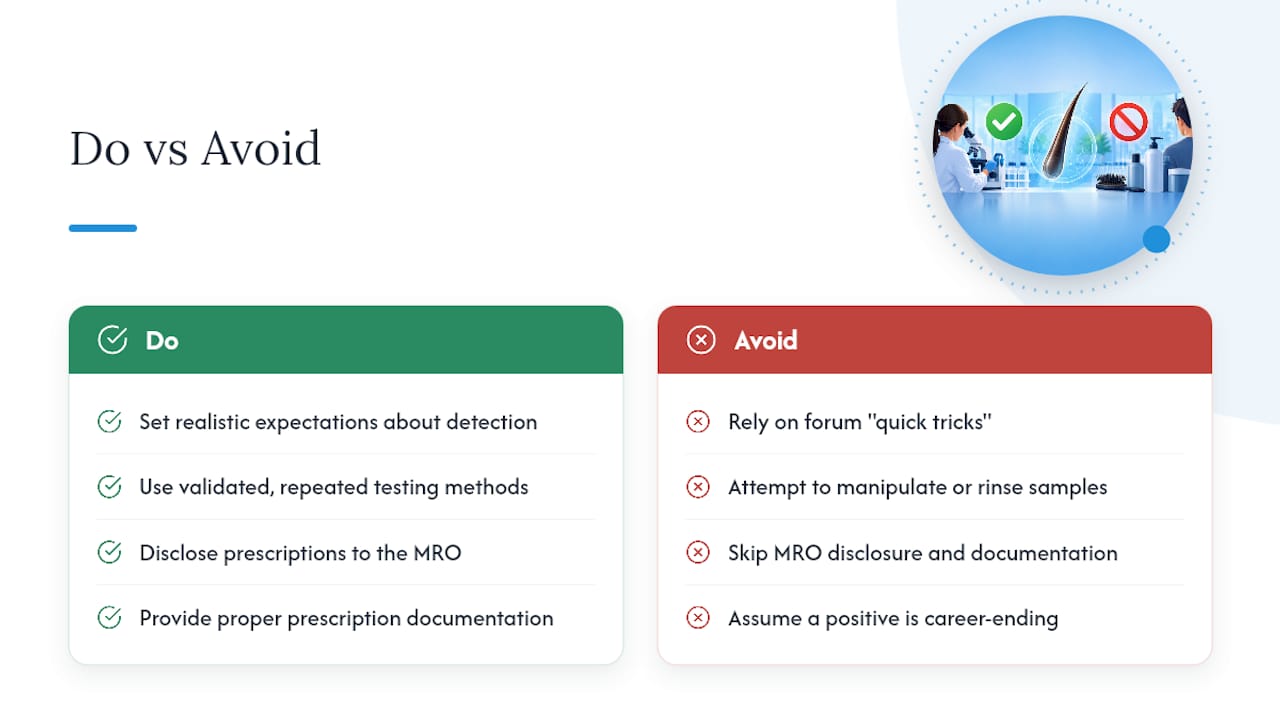
The biggest misconception about hair testing is that it is beatable with a quick trick found in a forum thread. It is not. Hair testing measures what got incorporated into the hair shaft over months, and no amount of surface rinsing undoes that chemistry on its own, which is why validated, repeated methods outperform one-time fixes.
The second misconception cuts the other way: people assume a positive is automatically career-ending. It usually is not, if the use is legitimately prescribed and documented properly through an MRO. Skipping that step, or trying to manipulate a sample instead of disclosing a prescription, turns a manageable situation into a legal and professional risk that documentation alone would have avoided.
— MIchael
Real preparation options if you have a test coming up
If you want a private read on your status before an official appointment, the Home Hair Test kit gives you that information without waiting on an employer’s timeline.
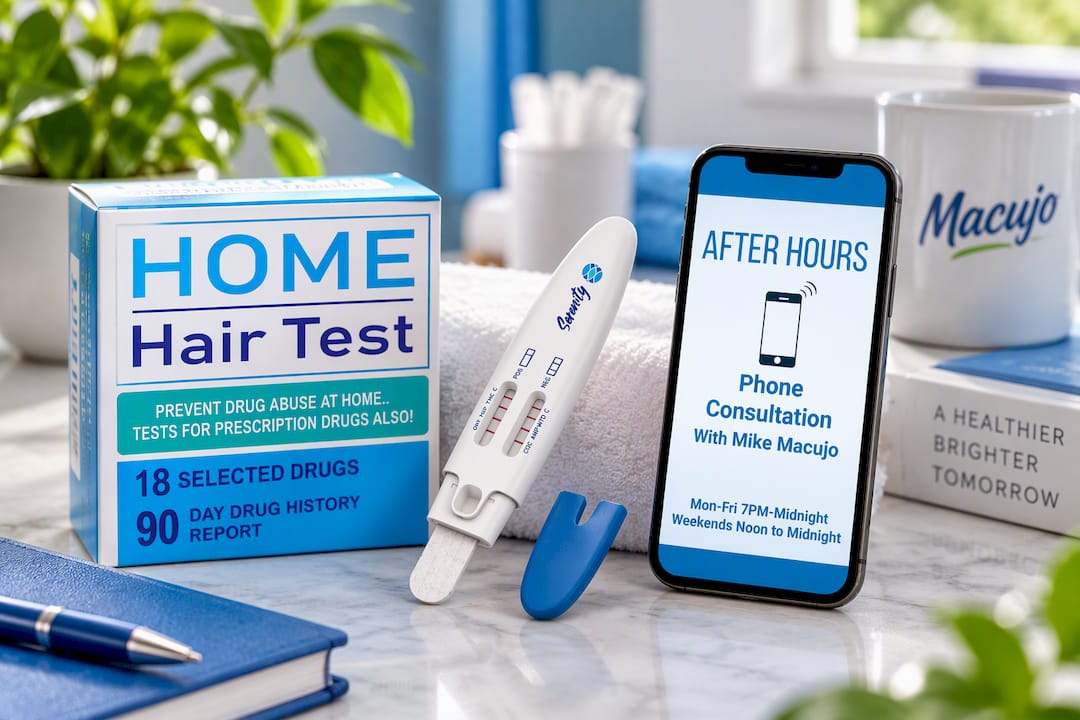
For situations involving other specimen types, the 12-Panel Multi-Drug Oral Fluid Test Saliva Drug Test covers saliva screening separately from hair. If your situation is more complicated, an Afterhours Personal Consultation gets you direct, one-on-one guidance instead of general advice. Preparation itself runs through the Macujo Aloe Rid Old Formula Shampoo paired with the required-washes calculator so the process matches your actual use history rather than a generic guess. None of this guarantees a specific outcome, but it gives you accurate information and a documented process instead of uncertainty.
This article is general information, not a substitute for advice from a qualified doctor. Consult a qualified healthcare professional about your own circumstances before acting on anything here.
Sources
- SoHT consensus on drugs of abuse (DoA) testing in hair (2021)
- Hair strand drug test: how it works, uses, and what to expect (Healthline)
- Study on variability in hair testing and the limits of quantitative interpretation (2026)
FAQ
What is the 28 day rule for Adderall?
There is no official rule tied to hair testing standards limiting to about 28 days; hair tests typically look at roughly 90 days of growth. The shorter figure sometimes circulates informally online, but it does not match the segment length or growth window labs actually use.
How long does Adderall show up in your hair?
A dose generally becomes detectable in scalp hair about 5 to 7 days after use, and the standard proximal hair segment covers roughly 90 days of growth. Actual detection can vary with dose, frequency, hair color, and chemical treatments.
How long after taking Adderall will I fail a drug test?
Hair tests need about 5 to 7 days after use before amphetamine is incorporated into scalp hair enough to detect. Urine and saliva tests work on much shorter timelines, since they reflect recent use rather than a growth window.
What shows up on a 12 panel hair follicle drug test?
A 12 panel test screens for a defined group of drug classes, which commonly include amphetamines, opioids, cocaine, and several others depending on the lab’s panel design. Adderall would register under the amphetamine class if used within the sample’s detection window.