Last Updated on September 28, 2026
Yes, specialized laboratories can detect LSD in hair, but a positive result is uncommon and hard to interpret even when it happens. Standard drug panels do not include LSD because typical doses are too small to leave a reliable trace, and the labs that can test for it need LC-MS/MS equipment built for sub-picogram sensitivity. Urine and blood remain the more dependable choices for confirming recent use. The sections below walk through the timelines, the lab science, and what to do if you are actually facing an LSD hair test.
TL;DR:
- Detecting LSD in hair is technically possible but exceptionally rare and requires highly sensitive LC-MS/MS testing built for detection limits below 0.25 picograms per milligram.
- LSD’s low dosage and incorporation into hair mean it often falls below assay detection thresholds, making positive results uncommon and difficult to interpret reliably.
- The typical hair growth rate of one centimeter per month is an approximation, but it is less reliable for LSD due to variable hair growth and low concentrations.
- External contamination can cause false positives, and measuring metabolites like O-H-LSD offers a clearer picture of actual use, though these methods are not yet standardized.
- Blood and urine tests provide more reliable, shorter-term detection options, while hair testing is mainly useful for extended historical patterns and is less commonly used for LSD.
Table of Contents
- Can labs find LSD in hair? What tests and sensitivity that requires
- Timeline: when LSD shows up in hair and how long it can be detected
- Why hair results for LSD are hard to interpret
- How hair testing compares with urine, blood, and other matrices for LSD
- If you face an LSD hair test: practical steps to confirm, contest, or prepare
- Publisher perspective: expertise behind hair-test preparedness
- How Macujo can help with hair-test preparedness
- Sources
- FAQ
Can labs find LSD in hair? What tests and sensitivity that requires
Finding LSD in hair is a different problem than finding THC or cocaine. LSD doses are measured in micrograms, thousands of times smaller than a typical dose of most other drugs a workplace panel screens for. That means the amount of drug that ends up locked into a hair shaft is tiny, often near the floor of what any instrument can measure.
Immunoassays, the antibody-based screening tests used for routine panels, are not sensitive or specific enough to pick up LSD reliably at these levels. Detecting it requires liquid chromatography tandem mass spectrometry, or LC-MS/MS, which separates and identifies compounds by mass rather than by how they bind to an antibody. A validated LC-MS/MS method for hair has reported limits of detection around 0.25 picograms per milligram for LSD, a threshold so low it demonstrates just how little drug needs to be present, and how easily a result can sit right at the edge of what the assay can reliably call a detection.
That sensitivity has been enough to identify LSD and its metabolite, 2-oxo-3-hydroxy-LSD (O-H-LSD), in real forensic case samples, which confirms detection is technically feasible. Feasible is not the same as common, though.
- Routine hair panels for employment or insurance almost never include LSD because of the cost and complexity of the testing.
- Microgram-level dosing means hair incorporation is often near or below the assay’s detection limit.
- Case and method studies, including early work on LSD detection in human and animal hair, show positive findings only in a minority of tested users, with concentrations varying by dose and even hair pigmentation.
If you are told a lab found LSD in a hair sample, that result came from a specialized, targeted test, not a standard multi-panel screen.
Timeline: when LSD shows up in hair and how long it can be detected
Hair does not record a drug the moment it enters the bloodstream. There is a lag between use and when that segment of hair grows out enough to sample and test.
- After ingestion, LSD circulates in the blood and gets incorporated into the hair follicle as the strand grows, but that new growth needs to reach the scalp surface before it can be cut and tested, a process that generally takes about two to three weeks according to guidance from DNA Legal.
- Labs commonly use a rule of thumb that one centimeter of hair growth generally represents about one month of history, which lets them section a sample into a rough drug-use timeline.
- That heuristic is an approximation everywhere it is used, and it is even less reliable for LSD specifically, since growth rates vary between individuals and low, inconsistent concentrations make month-by-month segmentation unreliable.
- Reported detection windows in the literature vary widely depending on dose size, hair color, and how sensitive the assay used actually was, so there is no single agreed-upon maximum window for LSD the way there is for more commonly tested drugs.
A negative hair result is not proof that someone did not recently use LSD. A 2018 peer-reviewed review concluded that the absence of LSD in head hair does not formally rule out consumption, largely because the data available on LSD in hair is sparse compared to other drug classes, and because a single low dose may simply never reach a detectable concentration in the first place. Anyone relying on a hair test to establish a precise LSD-use timeline should treat the one-centimeter rule as a starting point for discussion, not a verdict. For a broader look at how these growth-based windows work across other substances, see how long drugs stay in hair generally.
Why hair results for LSD are hard to interpret
A positive or negative hair result for LSD carries more uncertainty than most people expect, and the reasons are mostly procedural rather than chemical.
The National Institute of Justice has warned that laboratory wash procedures used to strip external contamination before testing are not standardized across the industry. That matters because hair sitting in an environment where LSD was present, even without ingestion, can pick up trace amounts on its surface. A wash step that is too gentle risks a false positive from contamination; one that is too aggressive risks stripping out drug that was genuinely incorporated into the hair shaft. Neither problem is fully solved by current protocols.
- External contamination on the hair surface can mimic a genuine internal exposure if decontamination steps are inconsistent or incomplete.
- Measuring the parent drug alone can miss real use, since LSD concentrations in hair tend to be low and inconsistent, so some researchers argue for measuring metabolites instead.
- Phase II conjugated metabolites are a promising way to separate contamination from actual use, since the body only produces them internally, but the approach is still exploratory and not yet standardized between labs.
- Pubic hair is sometimes used instead of head hair partly to avoid environmental exposure, but it introduces its own complication: possible contamination from urine, which can carry the same drug metabolites.
Small sample sizes across the available research add another layer of caution. Studies on LSD in hair, unlike studies on cannabis or opioids, tend to involve limited numbers of confirmed users, which makes it harder to generalize any single finding into a firm rule.
Pro Tip: If you’re reviewing a hair test result for LSD, ask the lab directly for its wash protocol and whether it measured metabolites like O-H-LSD in addition to the parent drug. Those two details tell you far more about the result’s reliability than the raw number does.
How hair testing compares with urine, blood, and other matrices for LSD
Each testing matrix answers a different question, and for LSD specifically, hair is rarely the first choice.
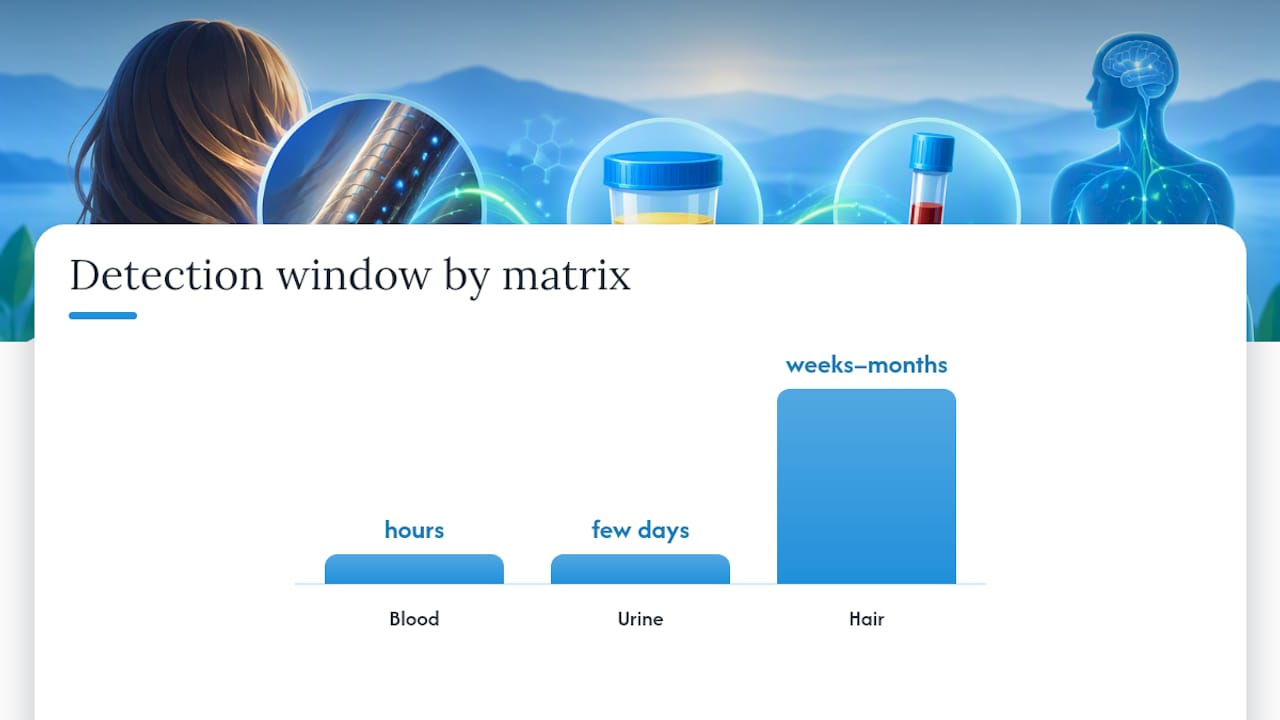
Blood detects LSD only for a matter of hours after use, which makes it useful for confirming very recent, active intoxication but nearly useless for establishing a longer history. Urine testing extends that window to a few days when a specialized assay is used, since standard urine panels do not screen for LSD by default any more than hair panels do. Hair, in theory, offers the longest window, stretching to weeks or months, but that theoretical advantage comes weighed down by the interpretation problems already described.
- Blood offers the shortest window but the clearest link to recent, active use.
- Urine, when tested with an assay built for LSD, can confirm use within the prior few days.
- Hair offers the longest potential window but carries the most uncertainty due to low concentrations and contamination risk.
Practical availability plays a role too. Validated LC-MS/MS assays for LSD in hair exist but are specialized and not something every lab stocks, while urine and blood testing infrastructure for other drug classes is far more common, even though LSD-specific urine assays still require deliberate ordering. Storage and stability also favor hair for retrospective work, since hair samples do not degrade the way blood or urine can.
Forensic and legal contexts tend to reach for hair testing when someone needs a longer retrospective chronology, for example establishing a pattern of use over months rather than confirming a single incident. When the question is simply “did this person use LSD recently,” urine or blood is the more reliable and more commonly available answer.
If you face an LSD hair test: practical steps to confirm, contest, or prepare
If an LSD hair result is part of a legal case, employment dispute, or any situation where the outcome matters, treat the paperwork as seriously as the sample itself.
- Request the lab’s exact methodology, including the limit of detection used, whether metabolites such as O-H-LSD were measured alongside the parent drug, and the specific decontamination protocol applied before testing.
- Ask for chain-of-custody documentation and confirm the sample was sealed and handled correctly from collection through analysis.
- If the result is being contested, seek an independent, accredited laboratory to run a confirmatory test on a properly preserved portion of the same sample.
- If you are preparing ahead of a scheduled test rather than contesting a past one, a Home Hair Test kit can give you a sense of where you stand before the official test, and a personalized consultation can help you understand your specific situation.
- When a forensic toxicologist’s review is warranted, particularly in legal proceedings, insist on seeing the raw chromatograms and method validation documents rather than accepting a summary number alone.
Pro Tip: A fast way to gauge whether a lab’s LSD result deserves scrutiny is to ask for the raw chromatogram data and method validation records. If the signal sits close to the reported limit of detection, that alone is grounds for requesting an independent second opinion.
Publisher perspective: expertise behind hair-test preparedness
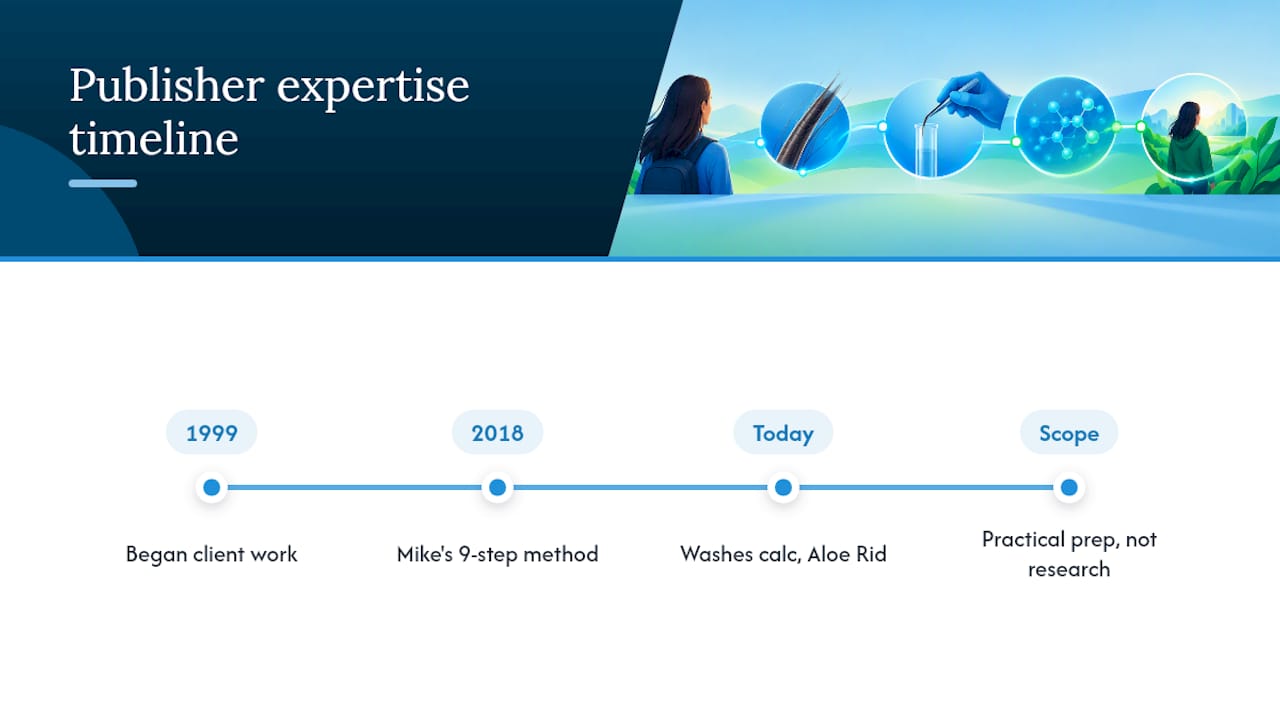
Macujo has worked with people preparing for hair follicle drug tests since approximately 1999, and Mike, who leads the company, created both the original Macujo Method and the current Mike’s Macujo Method, introduced in 2018 as a nine-step process built for high toxin exposure. That background is centered on practical test preparation rather than forensic toxicology research, and it is worth being clear about that distinction.
Where Macujo’s expertise applies directly is in the mechanics of preparing for a hair test: a required-washes calculator that factors in the substance, date of last use, and frequency of use over the prior ninety days, paired with Macujo Aloe Rid Shampoo and detailed step-by-step instructions. The company’s claims describe test preparation outcomes, not the underlying science of how LSD behaves in hair, which is a separate and still-developing field of research.
— MIchael
How Macujo can help with hair-test preparedness
If you have an LSD hair test coming up and want a clearer picture of where you stand before it happens, a few specific tools can help you prepare rather than guess.
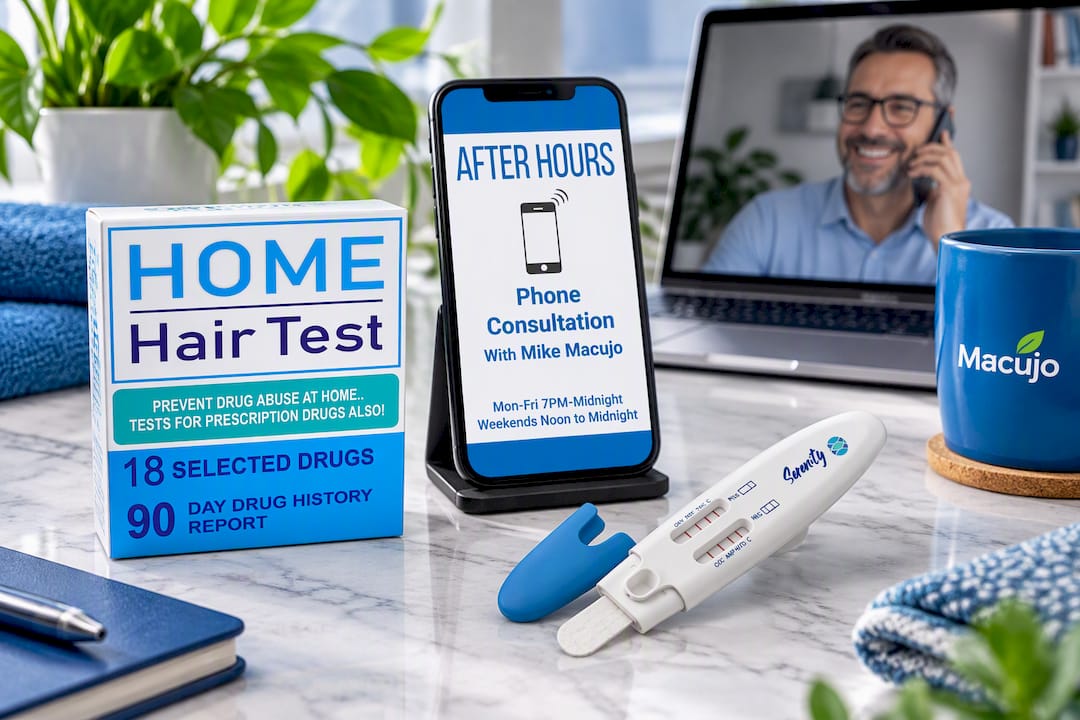
A Home Hair Test kit lets you check your own status ahead of an official test, which matters given how much uncertainty surrounds hair results generally. If your situation involves more than one substance or you want someone to walk through your specific history, an Afterhours Personal Consultation gives you direct access to expert guidance built around your actual timeline of use. And if your test is oral fluid rather than hair, a 12-Panel Multi-Drug Oral Fluid Test Saliva Drug Test offers a way to screen yourself before the official version.
- Home Hair Test kit: a pre-test check so you know where you stand before the appointment that counts.
- Afterhours Personal Consultation: direct expert guidance tailored to your substance history and timeline.
- 12-Panel Multi-Drug Oral Fluid Test Saliva Drug Test: an alternative screening option when the test you face is saliva-based rather than hair-based.
A required washes calculator uses your substance, date of last use, and frequency over the past ninety days to estimate how many washes might be needed. Browse the full range of hair, urine, and saliva test products to find what fits your timeline, or head straight to the shop to book a consultation if your test date is close. If you are disputing an existing lab result rather than preparing for an upcoming one, independent confirmatory testing through an accredited lab remains the right first move before anything else.
Sources
- Detecting drugs in hair: is it drug use or environmental contamination? — National Institute of Justice
- LSD detection and interpretation in hair — PubMed (Richeval et al.)
- Simultaneous determination of LSD and 2-oxo-3-hydroxy LSD in hair and urine by LC–MS/MS — ScienceDirect
- Phase II metabolites of drugs in hair: a potential solution for environmental contamination — OJP
FAQ
Can a standard hair drug test detect LSD?
No, standard multi-panel hair tests do not screen for LSD. Detecting it requires a specialized LC-MS/MS assay built specifically for that purpose, which most routine employment or insurance testing does not include.
How long does LSD stay detectable in hair?
There is no single agreed maximum window for LSD in hair because concentrations are naturally low and vary by dose, hair type, and assay sensitivity. Labs commonly use the rule that one centimeter of hair growth equals roughly one month, but that approximation is less reliable for LSD than for more commonly tested drugs.
Can a negative LSD hair test rule out use?
No, a negative result does not formally exclude LSD use. A peer-reviewed review notes that sparse data and naturally low hair concentrations mean absence of detection is not the same as absence of use.
Why don’t employers test hair for LSD?
Employers generally don’t include LSD because typical doses are measured in micrograms, far smaller than drugs like THC or cocaine, which leaves too little drug incorporated into hair for routine immunoassay panels to catch. Testing for it requires specialized LC-MS/MS equipment that most standard panels don’t use.
What should I do if I get a positive LSD hair result?
Request the lab’s limit of detection, decontamination protocol, and whether metabolites like O-H-LSD were measured alongside the parent drug. If you plan to contest the result, seek an independent accredited lab for confirmatory testing and consider a forensic toxicologist’s review of the raw chromatogram data.